
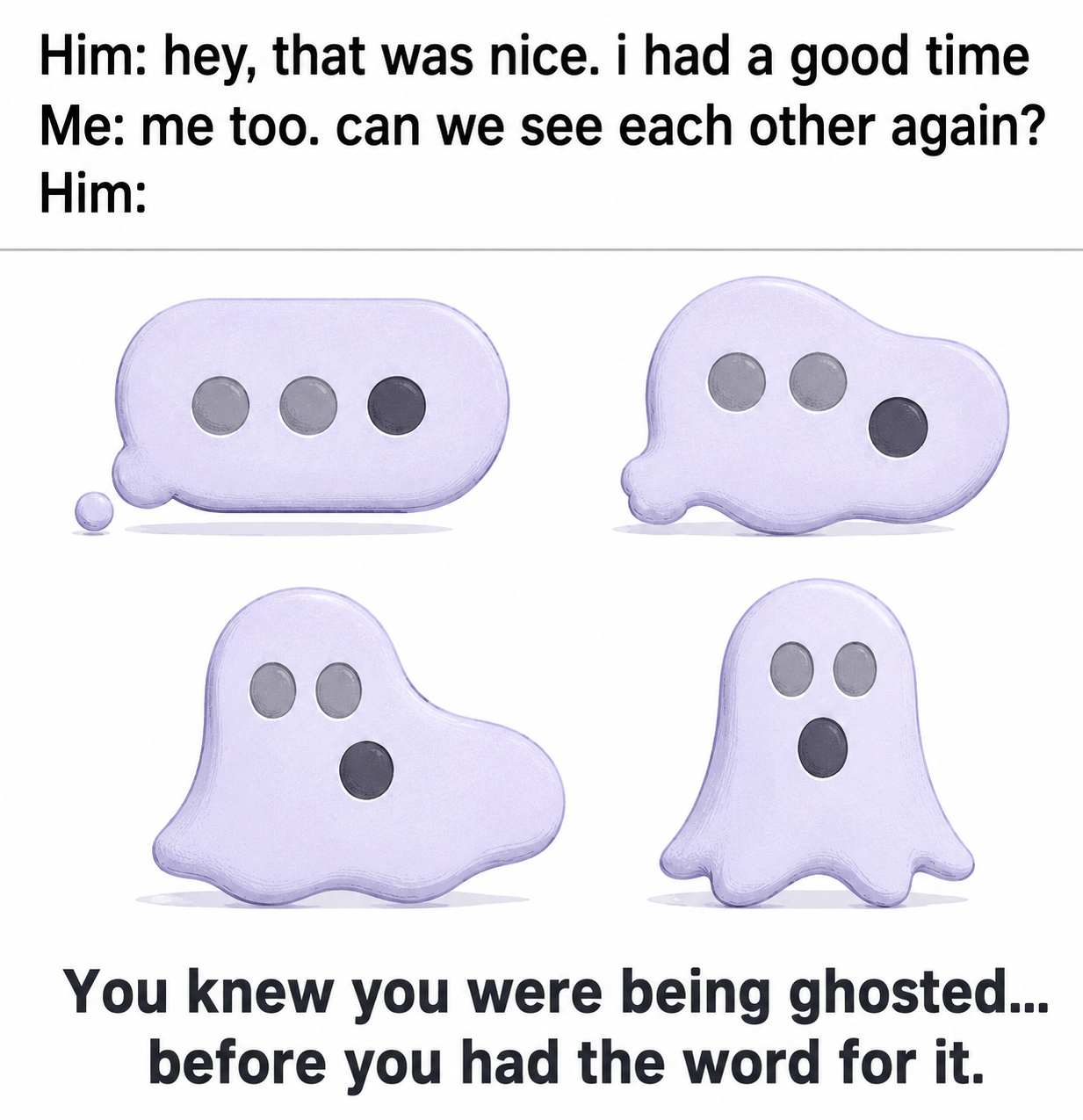
There’s a moment before you have the word for something…
Something feels off, but you can’t explain why, or when you realize there’s a word for an idea, like “sonder,” which is the sudden realization that every person around you has a life as complex as your own. Once you realize there’s a word for this, you start noticing it more, and then it changes the way you see other people.
There’s a shift that happens when you learn language.
If you can name something, you can ponder and question it. If you can question it, you can change it.
Words don’t create meaning, but they make it visible. And once meaning is visible, it becomes usable. Only then can you question and change it.
You can see this play out in real situations, like that moment when you realize your relationship isn’t just a “bad relationship,” but it has a name: abuse. That moment can also happen with terms like “gaslighting.” Once you have the word, you start seeing the meaning everywhere.
This moment doesn’t just happen in serious situations. In Tagalog, there’s the word “gigil.” It’s that overwhelming urge to squeeze something cute, like a kitten or a baby. English speakers know that feeling; we just don’t have a clean word for it.
In both cases, there’s a pattern of humans knowing meaning before the word. Having the word just makes meaning easier to notice and easier to talk about.
In everyday communication, something can be technically correct but still feel off in a meeting, an email, or a conversation. You may just not know the word for what it is yet. AI falls short here too, but in the opposite way. It can generate correct language, but it doesn’t always recognize the meaning underneath it.
When you learn another language, you’re not just learning new words. You’re learning new ways to interpret the world… and change it.
There’s more to “correct vs natural” English than grammar. Language is about the shared understanding two people have between meaning and words. When enough people share the same language for something, various interpretations of meaning around the world become more and more visible.
This is the space most people don’t talk about, and where a lot of the work I do sits: helping people recognize what’s happening in their English, not just whether it’s correct.
A quick note on working together
I run small, free workshops for advanced English users who are past grammar but need their English to feel natural and precise.
Upcoming workshops
How to be Persuasive in English — July 7, 2026
How Native Speakers Break the Rules — August 4, 2026
Why Humor Is So Hard in English (and How to Get It Right) — September 1, 2026
More info: https://one-s-jes.com/workshops/
I also take on a small number of editing and coaching clients. If you want direct, specific feedback on your English, feel free to reach out!
A closing thought
What’s a word you didn’t have before—but now you can’t unsee? “Ghosting” is mine. Once you know what it is… you start seeing it everywhere (and maybe overthinking a little).