
“I saw her duck.”
“Let’s meet next Friday.”
“I’m on my way (just left my house).”
You probably understood all three instantly.
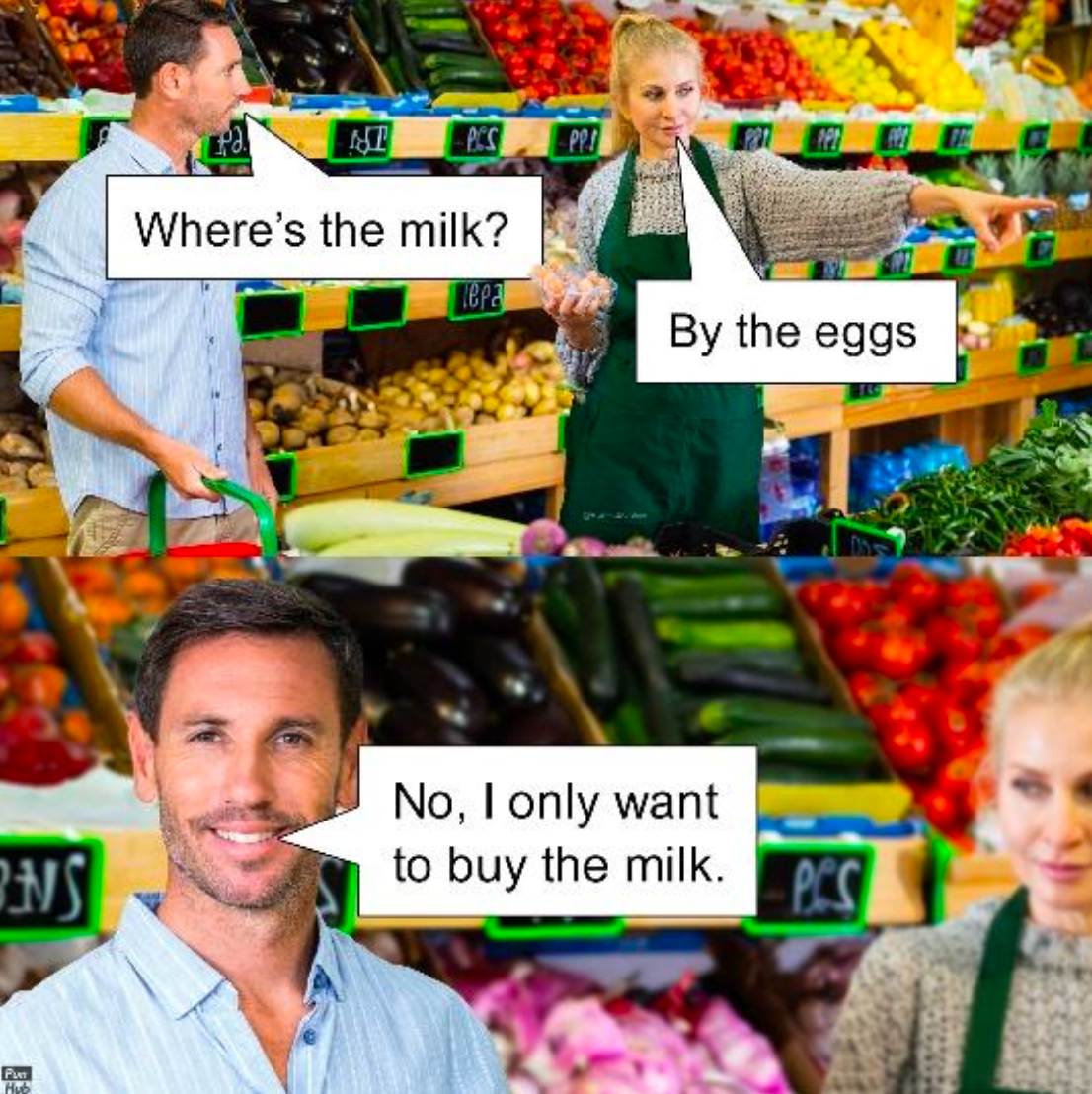
Each one is ambiguous. “Duck” could be a verb or a noun. “Next Friday” depends on where you are in the week. “On my way” might mean five minutes or forty-five. Your brain fills in the gaps without asking.
That process has a name: ambiguity resolution. Language is often underspecified on purpose, and humans use context, tone, and shared assumptions to complete the meaning.
In a second language or cross-cultural setting, those assumptions don’t match. The same sentence can land differently depending on who’s reading it and where they learned English.
For a student, that might mean misunderstanding instructions and doing the wrong assignment.
For a business professional, it might mean a vague update that slows down a project or creates friction with a client.
For a non-native ESL teacher, it might mean teaching something that is grammatically correct but sounds unnatural in real conversations.
AI produces ambiguous sentences all the time. It doesn’t resolve them. Humans do—or try to. And, if you give AI a sentence like “That’s interesting,” it might suggest changing it for clarity without knowing if you meant genuine interest or polite disagreement. Without all of the context, AI can’t tell what the sentence is doing—so its language suggestions and edits can miss the point entirely.
You can intend to be clear, direct, or polite, and still be heard in a completely different way. I push people to see where their language is ambiguous and decide whether that ambiguity works for them or against them.
Controlling how ambiguity gets interpreted is key!
A quick note on working together
Most advanced English users aren’t stuck on grammar. They’re stuck on how their English comes across. That’s the space I work in.
Free workshops
I run small, free workshops where you can bring real examples and get honest feedback.
Upcoming:
- How Native Speakers Break the Rules — August 4, 2026 ✨next week!
- Why Humor Is So Hard in English (and How to Get It Right) — September 1, 2026
- Advanced English for ESL Teachers: Your Questions — October 6, 2026
Join here: https://one-s-jes.com/workshops/
Direct help
I also work 1:1 with a small number of people. This is for you if:
- your English is already strong
- but it doesn’t sound like you yet
- or you’re not sure how it’s landing at work
You bring your real writing or speaking. I tell you exactly what works, what doesn’t, and why.
Reach out if that’s what you need!
A closing thought
Your brain is constantly guessing what people mean—and it’s usually right. When was the last time it guessed wrong?