
efl
-

Multilingual speakers don’t have a thinking problem
Teaching ESL, I hear this all the time: “I know what I want to say. I just don’t know how to say it.” This is because multilingual speakers don’t struggle to think. They struggle to translate their thinking into what sounds right to someone else. Multilingual speakers are working with multiple options at once. Different…
-

Meaning doesn’t live in words
“Coffee?” What does that mean? The answer is: all of them. There’s no subject. No verb. No full sentence. But… it’s completely clear. That’s because meaning doesn’t live inside the word “coffee.” It comes from context: where you are, who you’re with, what just happened, and what both people already understand. Philosophers like Wittgenstein argued…
-
Native speakers break rules constantly
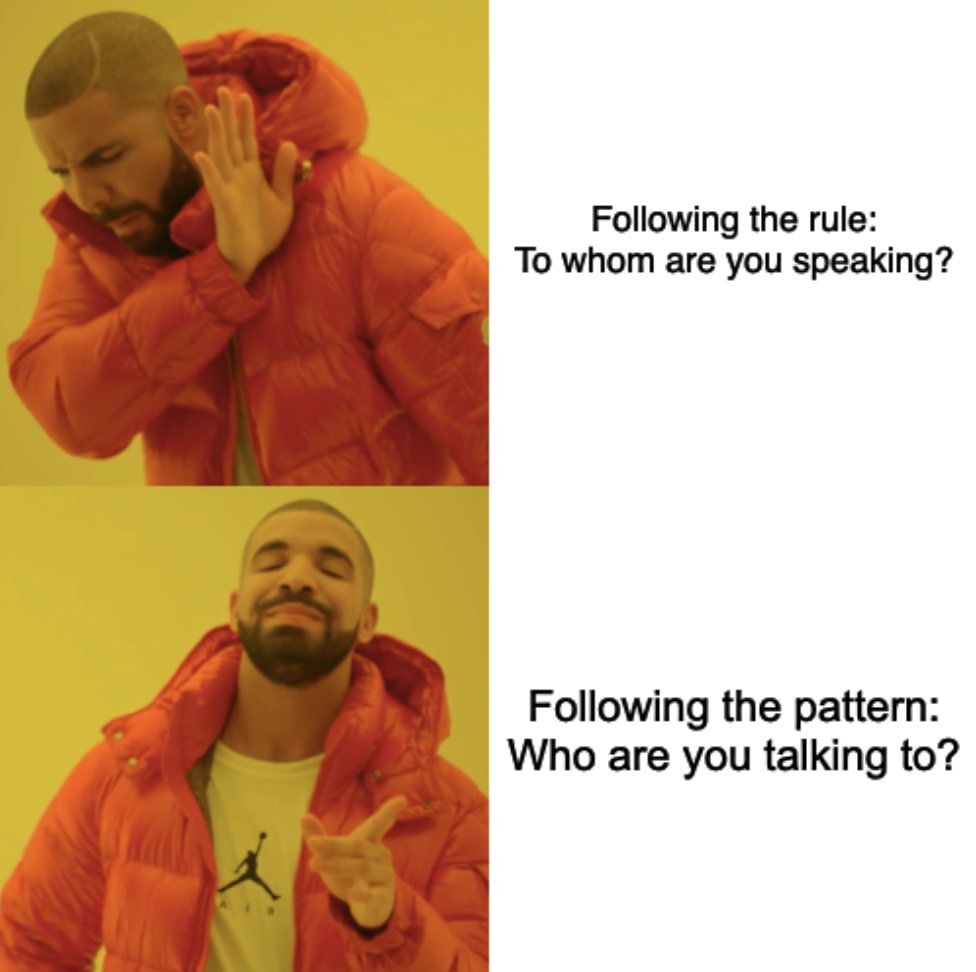
“Who are you talking to?” That sounds completely normal. No one stops mid-conversation to panic about a preposition. Buuuut teeeechnically, you’re not supposed to end a sentence with one. Most people don’t even know that rule. And even the ones who do ignore it constantly. Some rules come from formal grammar teaching, but real English…
-
Garden path sentences: this sentence breaks your brain
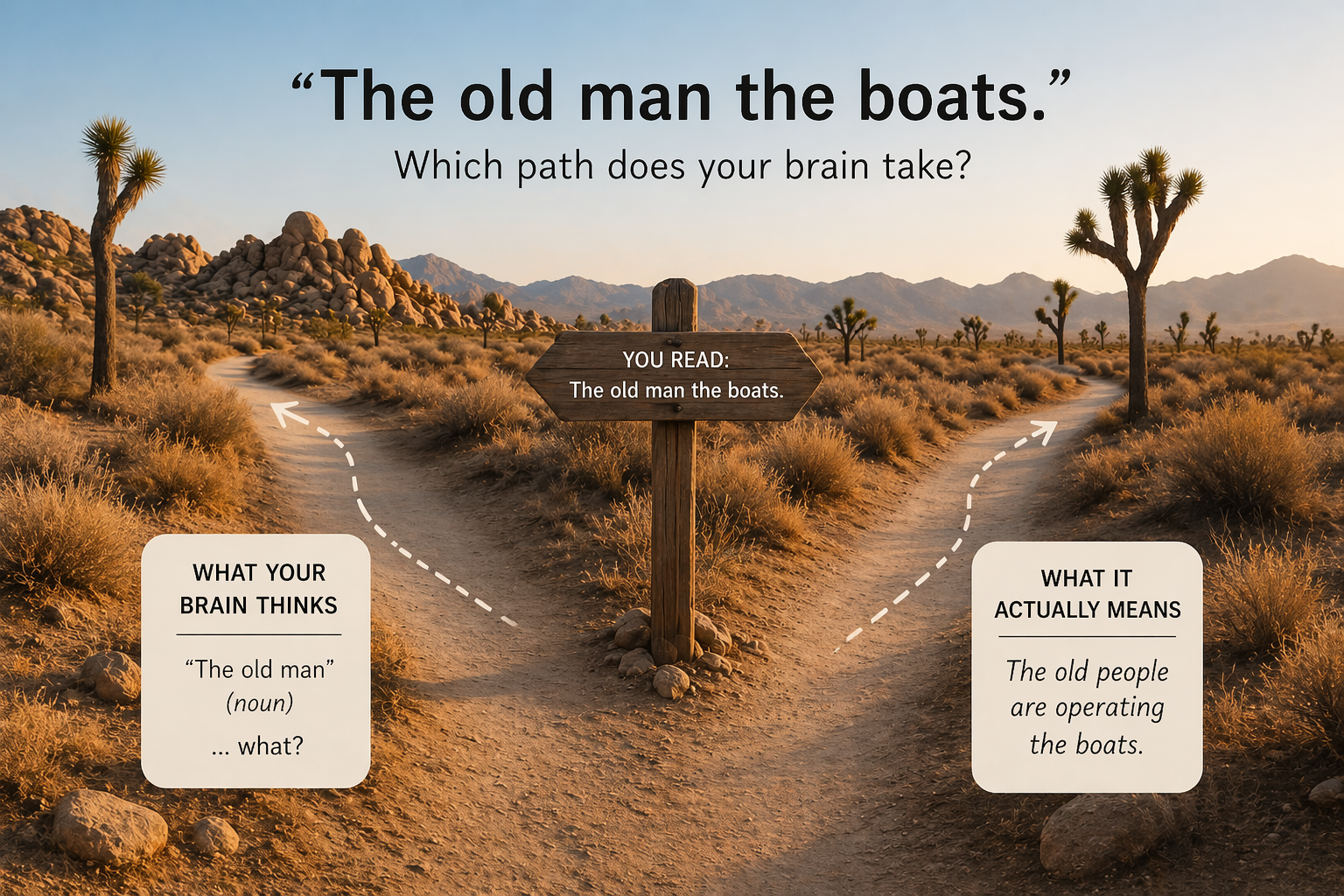
“The old man the boats.” That’s it. That’s the sentence. It feels wrong. But it’s grammatically correct. Most people read it wrong the first time. Your brain tries to make sense of it… and fails. Garden path sentences are sentences that lead you toward one interpretation, then force you to go back and reinterpret everything—confusing…